Daphne Corboz will finally take the pitch as a member of Sky Blue this upcoming NWSL season. After being the 22nd pick in the 2015 NWSL draft for SBFC, Corboz decided to play for Manchester City in the FA Women’s Super League instead, where she made 15 appearances and scored two goals and helped her team win their first FAWSL title.
The Georgetown Hoya was one of the best attacking players during her college days. In 2013 she racked up 27 points–7 goals, 13 assists–in 16 games played. She was named as a Second Team All-America selection by the National Soccer Coaches Association of America as well as being the Big East Midfielder of the Year and being an All-Big Eat First Team selection.
👉 NJ native 👉 2 yrs at Manchester City 👉 Georgetown all-time leading goal scorer
Head coach Christie Holly was quoted in the Sky Blue press release as saying, “We are delighted to have signed Daphne Corboz. She is going to be a key piece to what we are trying to achieve over the next number of seasons, and she is an attractive player to us for many reasons. For starters, she is a New Jersey girl and has a full appreciation of what it means to wear the Sky Blue FC crest. She is someone who brings a huge amount of qualities on the field, and she also has a great personality off the field as well.”
Jen Muller from Cloud 9, when asked for comment said, “Not a bad way to start the day. When it was announced that Corboz would not be returning to Manchester City we hoped Sky Blue would find a way to bring her home to New Jersey. Very excited to see what the team can accomplish with this addition, especially now that it seems like O’Hara will be part of the attack. Between our returning players, our draftees, and now Corboz, it’s going to be a fun season.”
Needless to say, Sky Blue expects big things from this talented midfielder.
In their fourth season, the NWSL has managed to do something that the MLS was not able to do in their first four years: find growth in attendance. I thought it would be interesting to take a look at attendance between NWSL teams that share cities with MLS teams and see if those numbers might mean anything for the future of the league.
Breaking Down Attendance
Overall, the NWSL is struggling to match the numbers of MLS teams in the same cities. They’re only averaging 1/4th of what the MLS is averaging. Plus, the MLS teams reached 50% stadium capacity by their 4th year and 64% by 2016, while the women’s league is only at 27%. However, the NWSL is experiencing a greater amount of growth than the MLS experienced in their first 4 years. As you can see in Figure 2, the MLS teams who are either partnered with an NWSL team or in the same city as an NWSL team have only had, on average, a 6.4% increase in attendance from their inaugural season into their 4th year (the MLS as a whole saw a 20% decrease in attendance overall). While, the NWSL has seen a 30% overall increase in attendance. Even though the literal number of people attending the games isn’t as high as the men’s league, the fact that the attendance increase has been so high over the past four years should say a great deal about the overall future of the league.
*For Figures 3 and 4, the “MLS Same Year” category corresponds to what year 2016 was for that specific NWSL team. Ex: 2016 was the Houston Dash’s 3rd season, so the “MLS Same Year” percentage is based on the Houston Dynamo’s 3rd season.
The three teams who lead the league in overall attendance in 2016 (Portland, Orlando, and Houston) are the same three teams who are partnered with an MLS team, suggesting that partnering with an MLS team provides the resources and brand recognition that leads to more ticket sales. You can even see in Figure 4, that the percentage of attendance compared to the MLS is significantly higher in partnered cities than in non-partnered cities. This is further evidence that a direct partnership is beneficial to an NWSL team. Though, it will be interesting to see if these numbers will hold for Orlando given they are only one season old.
Another interesting result to point out is stadium capacity. As of right now, 6 of the 10 teams are averaging above 70% capacity per game, although the average capacity of the NWSL is at 34%. This is obviously due to some teams playing in much larger stadiums than others. We do need to keep in mind that the smallest MLS stadium holds 18,000, while most NWSL stadiums hold between 3,500-6,000 people. In terms of potential for growth, I would hope that in the future a few of those six teams would look for larger stadiums to call home since they are doing a decent job of filling the space they have currently.
Breaking Down Each Team
1. Portland Thorns
Population: 609,456
Stadium Capacity: 22,000
MLS Team: Portland Timbers (Partnered)
Portland is the gold standard for an NWSL team, but they should essentially be ruled as an outlier for all statistics surrounding the league. They are tripling the average attendance for the league at every home game. They are also the only team in the NWSL that can come close to rivaling their MLS team in attendance. Portland is an all-around amazing soccer city. This could be due to the success of University of Portland soccer program and a lack of NFL and MLB teams. Whatever the case may be, just keep up the good work, Portland.
2. Orlando Pride
Population: 255,483
Stadium Capacity: 61,348*
MLS Team: Orlando City (Partnered)
The Orlando Pride currently has the 2nd highest attendance in the league. Although the home opener (which was 23,403) is definitely an outlier, their last three home games have been 7052, 7247, and 5842, which is still higher than the NWSL average. Both the Pride and City are doing a fantastic job at keeping their attendance high, but it is difficult to gauge whether or not they will sustain these averages since they are both less than two years old. Due to the size of their current stadium, their stadium capacity percentage is pretty low. Of course, this will change as of next year when their new 25,500 capacity stadium is built. Hopefully, this will make the atmosphere of the women’s games more exciting to attend and will drive the men’s team to sell out every home game.
*the team’s Wikipedia page says the capacity for Camping World Stadium is both 60,219 and 61,348, but upon Googling the capacity it says 70,000, so I stuck with the middle number.
3. Houston Dash
Population: 2,196,000
Stadium Capacity: 7,000 (Expandable)
MLS Team: Houston Dynamo (Partnered)
Another example of the benefits of partnering with an MLS team is the Houston Dash. Since their inception, the Dash have never made the playoffs and have only been ranked in the top 3 twice out of 56 weeks. In short, their team is not the best, and yet people are still showing up to games. Their total growth since their expansion has been positive. They have experienced a small decline in attendance from 2015-2016, but the Houston Dynamo have actually been experiencing a decline in attendance for the last four years. This suggests that there is a larger problem happening in Houston and that the Dash are actually doing pretty well.
4. Seattle Reign
Population: 652,405
Stadium Capacity: 6,000 (Expandable)
MLS Team: Seattle Sounders (Not Partnered)
Seattle has the highest attendance among teams that are not partnered with an MLS team. They have experienced excellent growth since their first year (92%), but their year-to-year growth is decreasing in rate. When you look at the attendance of the Reign compared to the Sounders, you see a huge a problem. The Reign’s average attendance in 2016 is 4,427, while the Sounders are at a staggering 42,203. This is the largest gap of any NWSL team. This could be due to any number of issues, such as the quality of their stadium or lack of support and resources for the marketing and sales team to find the untapped market of soccer fans. Overall, it is clear that Seattle has a city full of people who love soccer; yet it is not being translated over to the Reign.
5. Boston Breakers
Population: 645,996
Stadium Capacity: 4,500
MLS Team: New England Revolution (Not Partnered)
Boston has had an overall above average growth, and more importantly, a growth that has been increasing in average every year. The Breakers also have one of the highest stadium capacity percentages in the NWSL. This is promising, especially because in the New England Revolution’s fourth year, they experienced a 13.5% loss in attendance. Can you imagine how great Boston would be doing in attendance if they had a winning season? One can dream.
6. Washington Spirit
Population: 90,676*
Stadium Capacity: 4,000
MLS Team: DC United (Not Partnered)
The Washington Spirit have had virtually no growth (4%) since their first season, yet they have the highest stadium capacity percentage at 95%. The clear issue here is that Washington is definitely one of the teams that needs to look at a larger stadium. With that being said, when comparing attendance trends of DC United and the Spirit, these were the only two teams that became a bit of a stretch to compare. Their stadiums are so far apart, you could almost argue that the Spirit are not even in a city with an MLS team. Regardless, it is still clear that the Spirit’s potential for growth is primarily dependent upon moving to a higher-capacity stadium.
*reflects the population of Germantown, Maryland: the home of their stadium.
7. Western New York Flash
Population: 210,358
Stadium Capacity: 13,768
MLS Team: None
The Flash are one of only two teams to experience an overall drop in attendance since their first year. This suggests a large problem. In 2013, their average attendance was 4,485. In the World Cup year of 2015, that number had dropped to 2,860. The drop could be correlated to losing players like Carli Lloyd and Abby Wambach, but big-name players have left other NWSL teams before, and the attendance for those teams has not fallen by almost 37%. With that being said, the Flash have grown from 2015 to 2016 by 25%, meaning they could be back on the right track for future growth.
8. FC Kansas City
Population: 467,007
Stadium Capacity: 4,626
MLS Team: Sporting Kansas City (Not Partnered)
While FC Kansas City is the only other team besides the Flash to show a decline in attendance overtime, it’s tough to actually read into year over year fluctuations because they have changed stadiums multiple times. A positive for FCKC is that if you take out their first year, their attendance is showing an overall growth. They are the highest team overall for stadium capacity (99%), which suggests they are another team who would benefit from playing at a larger field. FCKC is also the closest NWSL team to “Same City MLS” attendance in Year 4 (besides Portland) at 43%. These are all positive signs that Kansas City could climb the attendance charts in the future.
9. Chicago Red Stars
Population: 2,719,000
Stadium Capacity: 30,000
MLS Team: Chicago Fire (Not Partnered)
Chicago has had the second largest year-to-year growth at 74% but has the second-lowest attendance in the entire league. The Red Stars are currently in the largest city of any NWSL team. There are nearly 3 million people in the city of Chicago. They play in the same stadium as the Chicago Fire, who are averaging 15,000 per game. This is an issue. It’s an even larger issue because the NWSL headquarters are also located in the windy city. What is happening in Chicago? It’s possible that they’re in a city oversaturated by other huge sports markets (the Bulls, the Bears, the Cubs, the Blackhawks, etc.). This would suggest that population theory alone is not enough to sustain a pro women’s soccer team. But, it also makes you question the team of individuals working to promote the Red Stars. Chicago, you’ve got some work to do.
10. Sky Blue FC
Population: 55,831
Stadium Capacity: 5,000
MLS Team: None
Last but not least, Sky Blue comes in at the bottom of the list with an average attendance of 1,811 in 2016. One clear issue: they are located in the smallest town of all the NWSL teams, which suggests the obvious, they have less people in their market. Another issue: they are currently sharing a field with Rutgers, so why aren’t they drawing more of a college crowd? Many people have criticized Sky Blue in the past of only focusing their marketing on youth, rather than a more diverse fanbase. These could be factors in determining why their attendance is so low. In my opinion (and it’s not an original one), Sky Blue should consider relocating to a reasonable sized market where they can access the resources to bring in a larger fanbase.
All this to say, there is a great deal of work that still needs to be done within certain teams. However, the NWSL has had growth that suggests a sustainable future.
All-Star games are a part of most major sports. A way to see the best of the best in that league square off against each other on two super teams.
Some leagues, like Major League Baseball, put some importance on the game by using it to award home field advantage in the World Series. Some leagues, like the National Football League, use it to give their players a vacation to Hawaii each year. Now, I’m not saying that a hypothetical NWSL All-Star Game should be used for either of those purposes, but with the proper attention given, it could make a great televised promotion (just an idea for next season). However, with no actual all-star game taking place, I am forced to imagine one for myself.
For the purposes of making two all-star teams, I’ve decided to split the NWSL into “East” and “West.” And while I use “West” loosely, there are few better ways to get two groups of 5 teams that make sense.
East Teams: Western New York, Boston, Sky Blue, Washington, Orlando
West Teams: Chicago, FC Kansas City, Houston, Portland, Seattle
There are may ways to pick two all-star teams from these two groups. But before teams can be picked there must be coaches. The simplest way I’ve found is to use the coaches from the top-ranked teams in each of the two “conferences” created for the all-star game. The number-one ranked Washington Spirit’s Head Coach Jim Gabarra would coach the East, while number-two Portland Thorns’ coach Mark Parsons would coach the West.
Once you have the “conferences” and the coaches, it’s time to create the rules. I’ve gone with a set that limits the number USWNT and international players to try to give a platform to players who have been outstanding in the NWSL.
1) There will be 18 players on each team: 2 goalkeepers and 16 field players.
2) Each of the 10 teams must have at least 1 player represented.
3) No team may have more than 4 players represented.
4) No team may have more than three current USWNT players.
4a) A current USWNT player is one who was named to the 18 person Olympic roster.
5) No team may have more than three current international national team players.
5a) A current international national team player is one who was named to the 18 person Olympic roster for their country.
5b) If a player plays for a national team that did not make the Olympics they do not take up an international spot
6) The NWSL will be broken up into “East” and “West” conferences, from which the all-star teams will be formed.
6a) East Teams: Western New York, Boston, Sky Blue, Washington, Orlando
6b) West Teams: Chicago, FCKC, Houston, Portland, Seattle
7) The game shall be 90 minutes with two 45 minute halves.
7a) If the game is tied after 90 there will be 30 minutes of extra time split in to two 15-minute halves.
7b) If the game is still tied after both halves of extra time, the game will go to penalty kicks.
8) There can be up to 7 substitutions.
The only rule that might be unexpected is the 7 substitutes rule. That is simply a functional way to let each of the 18 all stars on each team play if the coach wishes. Though the coach can decide not to play a player if they wish.
Now that pesky things like rules and coaching are out of the way, we can move on to the team rosters. There are many ways to pick the team: fan voting, appoint two captains and let them pick, have the coaches pick, some combo of either, etc. But since I have to power to pick the rosters, I’m going to create two teams that I most want to see play in the context of the rules I set out. (If you don’t like my picks, make your own all-star teams.)
The way I set it up, only 6 out of 18 players can be USWNT or international Olympians. Leaving two thirds of the NWSL all-star team to be NWSL players. While players like Heather O’Reilly are classified as NWSL players, not USWNT players because she didn’t make the 18, I think it’s fair to say over the last 8 months most of the minutes she has played are in fact NWSL minutes anyway. And players like Jess Fishlock, a Welsh international, are excluded because Wales was not qualified for the Olympics. It is a bit of a grey area but no system is perfect.
A few notes before I unveil my list:
I tried to take NWSL into account first and foremost. A lot of big names aren’t listed because of it. You don’t find Alex Morgan, Carli Lloyd, or Meghan Klingenberg on this list, partly because of the limits I placed on USWNT players and partly because I don’t find their NWSL play to be worthy of an all-star team nomination.
I fully admit that bias played a part in my picks. No matter how much I try to make this list as fair as possible, there are players who have gotten into the 18 of both teams that might not have if someone else were doing the picking. That’s just the nature of watching a lot of soccer and knowing who I enjoy. I make no apologies about it.
The limits I put on USWNT and international Olympians likely wouldn’t be there to this limit if the NWSL was doing the rule making. They want—maybe even need—Alex Morgan, Carli Lloyd, and other big names to draw fans. I don’t need their names to put butts in seats we don’t have.
[table id=2 /]
[table id=3 /]
Do you agree? Disagree? Let me know in the comments who I got wrong and who I got right. If you want, give me your 36 NWSL all stars.
Plenty of good and not so good things happened this week in the world of women’s soccer. Here’s my weekly roundup for you.
Kelley O’Hara Taken Down From Behind:
The tackle heard around the National Women’s Soccer League on Saturday night was on Sky Blue and USWNT member Kelley O’Hara. This was her first game back from Rio. The challenge came in the 91st minute from an unlikely source in Chicago Red Stars midfielder Alyssa Mautz. The tackle came from behind, which usually does not end well. This was an uncharacteristic foul by Mautz, who I’ve seen play in person. I’ve watched countless footage from her A&M days and in the NWSL, and I’ve never seen her make that kind of reckless challenge. I am in no way excusing her decision to make that tackle, as it was a terrible mistake and one that was strange because of the circumstances (Chicago was leading by three goals, clearly about to win). After leaving the stadium in a boot and on crutches, O’Hara seems to be in good spirits, taking to Twitter to update her status:
Made my heart happy to play again last night, despite the result. Thanks for the well wishes, I’ll be back soon 🙏 #kanklelife
If she didn’t have it before, this 21 year-old from Norway certainly has everyone’s attention now, after beating out French star Amandine Henry (PSG/Portland Thorns FC) and Germany’s Dzsenifer Marozsan (FFC Frankfurt/Olympique Lyonnais) to be named UEFA Best Women’s Player in Europe for 2015/2016. This is the first time that a German player hasn’t won (the last three winners include Celia Sasic, Nadine Kessler and Nadine Angerer). Hegerberg has scored an impressive 28 times in just 50 appearances for her national team since being called up in 2011—a feat exciting to see from someone so young. She plays her club ball at Olympique Lyonnais in France (D1 Feminine) and has made 43 appearances since 2014, scoring 59 goals along the way. She is proving to be a special player. Hopefully we will see more of the same from her in the future.
Duke Falls to Arkansas in NCAA upset:
When the number two ranked team in the country traveled to Fayetteville, Arkansas last Friday, I was sure they would come away with a convincing win, but I was wrong. Not only did Duke lose, they only managed three shots on goal and gave Arkansas their first win in program history over a top 10 ranked opponent. Credit of course to the Razorbacks for using home atmosphere to their full advantage, playing a very impressive match in front of a record crowd of 3,010. With the disappointing loss this early in the season, Duke has two wins and, looking ahead on the schedule, it doesn’t get any easier as the Blue Devils face North Carolina and West Virginia in the next two weeks (also top 10 teams). The good news for Duke is that it’s early in the season; they have time to improve and learn from mistakes to get where they need to be. For me, this is the biggest upset in Women’s Division I so far. What will it do for Arkansas and Duke moving forward? What kind of effect will this game have on the rest of the season? In the long run, it’s a massive confidence booster for Arkansas, proving they can seriously compete with any team. Duke will need to forget this game and get back to the quality soccer we are used to seeing. Definitely worth keeping an eye on these two teams.
Seattle Show Signs of Life:
The Seattle Reign faced the Portland Thorns this weekend, and they came away with a 3-1 win to end the Cascadia Rivalry with one win apiece. Before the match, the Reign were in sixth place in the NWSL standings and seven points out of playoff contention. With these three points, they move to fifth (helped by a Sky Blue loss) and are still mathematically in the hunt for that fourth spot. Dutch playmaker Manon Melis scored two goals, and Megan Rapinoe added a third to ensure a victory for Seattle. Melis now is the Reign’s leading goal scorer, with five on the year. The way they played, the spirit they showed, and the style in which they won reminded me of the Reign from last year’s regular season. With Jess Fishlock (looking refreshed), Bev Yanez, and the returning Kawasumi Naho all grabbing assists, the Reign looked very comfortable going forward. Haley Kopmeyer stood tall in goal for Seattle and (in the absence of Hope Solo) made six saves, while keeping her back line organized enough to grab three crucial points. It’s no secret the assertion of Naho into the lineup certainly has had a positive effect on the team. For Seattle fans, it feels like they are finally coming together. But with four games left, is it too late? Playing in front of 5,888 at home seemed to give the Reign that energy and spark needed to win. I’m not counting out Harvey’s team just yet.
Marta and Schelin lead FC Rosengard to Swedish Cup Victory:
Less than week after the Olympics ended, many players were back with respective clubs, including five-time Ballon d’Or winner Marta and Olympic silver medalist Lotta Schelin. Both play for FC Rosengard in the top Swedish league, the Damallsvenkan. FCR are known for bringing in top players from all over the world; in the past they have fielded the likes of Ramona Bachman (SUI), Nilla Fischer (SWE), Formiga (BRA), Ana Mittag (GER), and Manon Melis (NLD). The rich history is understandably quite the draw for many players. The Svenska Cupen final against Linkoping FC had many recognizable players on display for Rosengard: Marta, Schelin, Emma Berglund (captain), Ali Riley, Ella Masar, and Lieke Martens. For Linkoping, one standout player is Stina Blackstenius, who many should remember played a superb tournament for Sweden in the recent Olympics. She scored the only goal for Linkoping but just didn’t have enough star power to find the win. As for Rosengard, they put on a dominant 3-1 performance, with goals from Marta, Schelin, and Martens to earn the victory. This was the club’s third Svenska Cupen in program history, and with that kind of roster, one of its most impressive, surely.
Dunn Hasn’t Been Crystal Clear For Washington:
Last year’s NWSL MVP has yet to score a single goal in 2016. Yes, you read that correctly. Crystal Dunn had a breakout year in 2015, scoring 15 goals in 20 appearances. Last season she took 84 shots and 48 were on frame, yet this season, in 10 games Dunn has managed 23 shots; only seven have been on goal. Dunn hasn’t scored yet, but she has tallied four assists on the year. One explanation could be that teams have figured out how to frustrate her. With her speed, that is a difficult task, but players all across the league have shown the ability to contain her. Dunn has done tremendous work in games this season—her effort is next to none; she’s just contributing in a different way this year. It’s clear the Spirit, as a whole, have done a better job spreading the ball around, as 10 different players have scored this season, as opposed to seven players last season. Washington are sitting pretty in first place and have earned 35 points. They have more than proven that Dunn doesn’t need to do all the heavy lifting for them to have success. If you would’ve told me at the beginning of this year that the reigning MVP wouldn’t have a goal to her name with four games left, I would’ve laughed and said that’s crazy. Turns out Dunn and Washington are the ones laughing all the way to the playoffs.
With the USWNT beginning a new cycle and the team in transition, it’s time for new blood. In this two-part series, I take a look at whose NWSL play has earned a call-up to National Team camp and the chance to make an impression on Jill Ellis. Part One examined the defense, while Part Two takes a look at offense.
Center Midfield
Of all the many, many takes offered after the USWNT’s early exit from the Rio Olympics, perhaps none were louder than those pointing out the issues in center midfield. Last year’s retirements left two gaping holes in the shapes of Shannon Boxx and Lauren Holiday. Jill Ellis never really tried to replace Boxx, a U.S. legend at defensive midfielder, who hadn’t been a factor for the U.S. since early 2013. Morgan Brian occupied the spot during the latter part of the 2015 World Cup and performed admirably, but since then Ellis has preferred her higher up the pitch. Holiday, although perhaps never used to her potential on the NT, was nevertheless a formidable presence in the midfield that has been sorely missed. Like fullback, the time is ripe for young center midfielders to enter the fray, and thankfully, the NWSL has plenty.
Leading the charge is Danielle Colaprico. Called to camp last year, the backbone of the Red Stars midfield was recovering from injury and did not see any playing time. Colaprico is possibly the best heir to Boxx’s crown—an intelligent defensive midfielder whose command of the field belies her diminutive size. She can drop back to defend on top of the centerbacks, restart the play, push into the attack, and make it look easy. Last year’s NWSL Rookie of the Year, Colaprico was a huge part of Chicago’s success in making it to the playoffs and is an equally large reason they remain in the mix this year.
The other key to Chicago’s strong midfield is Vanessa DiBernardo. Like her teammate, DiBernardo has been called up to senior camp but did not play. Strong in the attack, she has a keen eye for finding seams in which to send balls to catch her forwards at the perfect time on their runs into the box, and she has a rocket of a shot of her own at her disposal as well. As a member of the 2012 U-20 World Cup championship team, DiBernardo already has international experience.
Yet another member of that 2012 U-20 team, as well as part of the 2013 UCLA championship squad, Sarah Killion has been quietly working her way back toward another call-up. She’s been as instrumental in Sky Blue’s midfield as her teammate Raquel Rodriguez, while only receiving half the attention. Rather like Holiday, she can be a box-to-box midfielder, honing her defensive skills on one end while setting up plays on the other. Killion has excellent distribution and a calm presence on the field. She’s also taken three penalty kicks for Sky Blue this year, converting all of them.
Winger
Kealia Ohai has been on the fringes of the National Team since arriving in the NWSL in 2014. Often in the discussion but never on a roster, Ohai started off this season slowly, struggling to find the back of the net. Then, due to a diminished roster after Houston’s Olympians departed, Ohai moved to outside midfielder, and she hasn’t looked back. Tied with Rachel Daly for the team lead in both goals and assists, Ohai has been tearing up and down the flanks of any pitch she’s stepped on. Her speed and turns have bested every fullback she’s faced, including WNT veteran Ali Krieger, while both her crosses and diagonal runs into the box have led to goals. Ohai is playing with newfound confidence and leadership, and as a small, fast forward converted to winger, she should be right up Ellis’s alley.
Sam Witteman has been an intriguing player to watch on the Orlando Pride. The rookie, who played in seven different positions in 2015 for California, has continued her versatile play in the NWSL. No matter which line she plays on, it’s clear she belongs on the flank. Witteman has great service from the outside and plays with an intelligence that makes one forget it’s her first professional season. Going forward, she is certainly one to watch.
Forward
Apart from goalkeeper, forward is likely the hardest position to break into on the USWNT. Often the face of the team, from Mia Hamm to Alex Morgan, the team tends to carry a lot of depth at forward. That said, the years in between cycles are the best time for turnover, so now is the time for NWSL goalscorers to make their mark.
Shea Groom struggled initially this season as the lone forward atop FC Kansas City’s formation, but once Tiffany McCarty was inserted on the flank, the two found a chemistry that has pushed Groom to third in the league for goals. The scrappy striker brings a quality that is missing among the WNT’s star forwards—a willingness to sacrifice her entire body to push the ball over the goal line, regardless of what (or who) is in her way. Groom messes with defenses across the league, getting under their skin with her relentless pressure and tireless work ethic.
It would be hard to ignore any of the Western New York Flash’s high-scoring front line of Lynn Williams and Jess McDonald, helped out by Makenzy Doniak. Williams and McDonald lead the league in goals, and McDonald also leads in assists. The three have combined for 17 goals in 15 games, propelling the Flash to third place. The trio makes up the speediest front line in the league and can score seemingly at will from both the run of play and set pieces. It’s hard to imagine any of them staying under the NT radar.
Another forward worth a look is Bev Yanez of the Seattle Reign. Yanez brings a wealth of professional experience, culminating in a 10-goal season last year, earning her a place in the league’s best XI. A technically gifted player in the vein of Christen Press, she is underrated, with both a nose for goal and a playmaking ability that shouldn’t be overlooked.
As Jill Ellis continues to place her emphasis on offense, she is fortunate to have a vastly talented pool at her disposal in the NWSL. These players are just a few of those who’ve earned the chance to wear the crest for the U.S.
With the USWNT beginning a new cycle and the team in transition, it’s time for new blood. In this two-part series, I take a look at whose NWSL play has earned a call-up to National Team camp and the chance to make an impression on Jill Ellis. Part One examines the defense.
Goalkeeper
Few positions on a National Team can be as impenetrable as goalkeeper. A goalkeeper is a long-term investment, and once a #1 is established, she can hold that spot for years longer than field players. For the majority of its 31-year lifetime, the USWNT has had three main goalkeepers: Mary Harvey, Briana Scurry, and Hope Solo. Harvey came aboard in 1989 and led the team to victory in the 1991 World Cup. Scurry received her first cap at age 22, became the starting goalkeeper before the 1995 World Cup, and held the spot for a decade. Solo made her first appearance at age 18 and took the regular starting position in 2005. Her ambitions for her career after the Rio Olympics have been unclear; often ambiguous, her statements about the future have ranged from assertions that her best is yet to come to more vague words that imply the time has come. Regardless, it’s clear the U.S. will soon be grooming a new #1, and probably should already have started.
The current backups, Alyssa Naeher and Ashlyn Harris, are both more than capable of holding the spot and performing well. However, as stated previously, the USWNT likes to find its goalkeepers young, allowing them to mature into the role and gain plenty of experience while doing such. With the record the U.S. has and the reputation both Scurry and Solo hold, it’s hard to argue with that. So which young NWSL goalkeepers could we see in U.S. colors soon?
Jane Campbell leads the discussion of probable Solo replacements, but the Stanford senior hasn’t played in the NWSL (yet). Abbie Smith is another talented college and Youth National Team goalkeeper who should be in the mix. Known for her booming goal kicks and punts, Smith was on her way to living up to her reputation as a top-notch keeper when she took over for Libby Stout on the Boston Breakers, but a knee injury in May took her out for the season. Assuming she regains her form, Smith should be on the USWNT watchlist.
The best option may well be Katelyn Rowland. A U-20 Women’s World Cup veteran like Harris, Naeher, and Smith before her, Rowland also starred at UCLA, setting NCAA shutout records and picking up two assists as well as leading the Bruins to the 2013 NCAA Championship. After a season and a half of serving as backup to Nicole Barnhart, longtime Solo backup herself and possibly the league’s best goalkeeper, Rowland made the bold move to leave FC Kansas City and assert herself as a #1, seeking a midseason trade to the Western New York Flash, where she soon secured the top spot. Rowland is an excellent shot stopper who rarely shows indecision off the line. As she earns more playing time at the professional level, Rowland should continue to grow and work her way into the National Team pool.
Centerback
The centerback position is fairly deep on the National Team currently. Becky Sauerbrunn is seemingly set to go another cycle with Julie Johnston at her side, while Whitney Engen is ready as backup and Emily Sonnett waits in the wings, not to mention Ali Krieger who spent a game and a half at the position this year for the team. It could be difficult for anyone to break into that group, but that’s not to say that the opportunity doesn’t exist.
Megan Oyster leads the pack. After a strong rookie season, Oyster started this year where she left off, helping propel Washington to the top of the table. However, after a dreadful game in Portland, Oyster has since struggled at times to regain her form, particularly when she was called upon to anchor the backline after the departure of her Rio-bound teammates. That said, her good performances far outweigh her mistakes, and Oyster has it in her to compete at the top.
Kassey Kallman is another option. After being a key part of the 2012 U-20 World Cup championship team, Kallman is on her third NWSL season, where she currently serves alongside Engen on Boston’s backline. The two are quietly one of the better centerback pairings in the league, where their record belies their solid work.
Another option may be Cari Roccaro. A youth NT standout and once considered a possible number one draft pick, Roccaro’s stock fell considerably when it was revealed she had been playing with two labral tears in her hips and would undergo surgery in the offseason, delaying her NWSL debut. However, her former Notre Dame head coach Randy Waldrum took a chance on her and brought her to the Houston Dash, where she completed rehab ahead of schedule and soon earned a starting position. Still not yet back to 100%, Roccaro is a disciplined player who is comfortable pushing up into the attack.
Finally, Abby Dahlkemper deserves a look. A former UCLA teammate of Rowland, the pair has reunited at Western New York, where Dahlkemper has stepped up. Most promising from Dahlkemper is that although her youth and relative inexperience occasionally show, she has shown definite improvement in her sophomore season. She also brings significant youth national team experience.
Fullback
Unlike central defense, the outside back pool for the USWNT is extremely shallow. Ali Krieger appears to have fallen from favor, while neither Kelley O’Hara nor Meghan Klingenberg had good tournaments in Rio. Jaelene Hinkle is the only young player to have seen any time at the spot recently, and although her National Team debut wasn’t stellar, her allocated status and tremendous season for the Flash may earn her a return appearance.
Lauren Barnes was invited to camp earlier this year but didn’t see any playing time. Barnes brings versatility to the role, as she can play both fullback and centerback. She hasn’t had a solid 2016 for the Seattle Reign, but who on the Reign this year has? If Barnes can regain her form, either central or outside, she could work her way back into the mix.
Finally, any discussion of outside backs would be remiss not to mention the best pairing in the league: the Chicago Red Stars’ Arin Gilliland and Casey Short. The two bring exactly what Ellis likes to see from her fullbacks – fast players, comfortable with the ball at their feet, who will push into the attack and don’t shy away from taking the shot themselves. However, both Short and Gilliland are also strong on the opposite side of the pitch, something Ellis’ current wingback system lacks. They’re skilled on 1v1 defense and demonstrate great awareness of when to drop back. It would be baffling to see January camp without at least one of the two on the list.
Although some old faces will be departing, the options are there for the USWNT to have a strong defense once again, which, as they undergo that rarity of a goalkeeper change, is absolutely necessary.
Up next: Part Two of the series, which will focus on offense.
I grew up in southeast Wisconsin, a place where Sunday Catholic masses in the fall usually included a reference to the Packers during the homily. And sometimes a joke about the Bears or the Vikings, to the delight of almost all. But I found football boring (little did I know) and paid it no mind.
I played basketball and baseball until sometime around seventh or eighth grade. I was big–tall–and slow.
The thing is, I’ve always been large. Fat, really. And the journey to being able to say that without feelings of overwhelming shame, well, it’s been a long one. And the thing about being the fat girl is that we don’t really play sports.
To be fair, women’s sports wasn’t really a viewing option. Maybe some golf, maybe some tennis. But except for Olympic years and major tournaments, I can’t remember seeing a women’s basketball game on television, never a women’s soccer game nor a women’s hockey game.
The bodies of female athletes that I saw on television were tall, toned, and definitely not fat. Toned, but not overly muscular. Even their athleticism was marked by a kind of grace that I just didn’t possess.
I never saw myself reflected in the women I saw playing sports. I didn’t see the fat girls.
As time marched on I eventually stopped playing sports. I tolerated gym class while I focused on other activities. For a long time, I looked at sports as something with nothing to offer me.
My foray back into the wide world of sports began with the NFL. With the Packers, a Super Bowl win, and the excitement of being able to connect with my dad and brothers. And, yes, the allure of the family Fantasy Football trophy.
But it wasn’t until the Women’s World Cup in 2015 that I truly became a sports fan. I’d never watched a soccer game before June 8th, 2015, when the USWNT bested Australia. No one in my family ever played soccer. None of my friends did. And, yeah, my dad, the football and basketball fan, thought it was boring. He’d say, “They’re always flopping around on the ground!” or “What good’s a sport where nobody scores?”
But I watched that game against Australia, and I was hooked.
Immediately.
My Google history from that night included a lot of names of players I’d never heard of before (I’d really only heard of Alex Morgan, Abby Wambach, and Hope Solo through cultural osmosis) as well as things like “What is stoppage time?” For reference, as a former basketball player, I was very concerned the first time I saw someone take the ball over the centerline, then back, then forward again.
“Isn’t that a foul? A backcourt violation?” I wondered.
Turns out, it was not.
Since June 8th, 2015, I have watched every single USWNT game.
I’ve watched as many NWSL games as I have been able (and while the ability to watch on YouTube is wonderful, are you seriously telling me that I have several hundred channels with my cable subscription, and not a single one is willing to broadcast the games?).
I went to a Chicago Red Stars game against Sky Blue FC earlier this year and had an amazing experience, and I took my mom to the July 9th USWNT match against South Africa. She’d never seen a soccer game before either, and she loved every minute of it. And when the Red Stars take on the Washington Spirit in their last game of the regular season later this year, I will be there, cheering my head off.
The USWNT turned me into a women’s soccer fan.
But I’ve also become more and more aware of my status as, what I’ve termed, a “fat fan.”
See, I’ve always been large, always been overweight. I think I was thin once, for about two weeks, after I was released from a hospitalization for pneumonia at the age of six months. I spent high school wearing super-sized Nike t-shirts and rocking the layered flannel look (and yes, I know–it wasn’t a look then; it still isn’t now).
I sit gingerly and carefully on seats that look unable to hold my weight–or I just stand–because I can still hear one of the kids back in elementary school taunting me about being too heavy for the desk chairs.
I get anxiety about flying on airplanes–because what if they want me to pay for a second seat? Or what if I get sat next to someone who makes a big deal about my arms touching theirs on, or my thighs touching theirs. (Fat flying anxiety: it’s an actual thing.)
And on the one hand, becoming a fan of soccer has introduced me to the whole wide world of female athlete body types, and honestly helped me move toward overcoming my lifetime’s worth of shame over being the fat girl. But at the same time, I find myself continually reminded of who I am.
Life as a fat fan—and this isn’t limited to soccer; it’s just the sport I have the most experience with of late—can be complicated. As much as sports celebrate bodies and active lifestyles, and as much as soccer has helped to promote body positivity (thank you, Ali Krieger, and Christen Press, for your ESPN Body Issue comments in 2015 and 2016, respectively), I am always reminded of my size as a fan.
What it’s like to be a fat fan?
First of all, the official merchandise.
Now, this isn’t a problem so much in the NFL–I have no problem getting a Jordy Nelson or Clay Matthews jersey in the size that I want.
But I have noticed that it’s a problem in the soccer world. The USSF caps replica and authentic jersey sizes at 2XL. In both men’s and women’s sizes. (Let’s not get lost in the many problems with women’s jerseys, but seriously, that v-neck?). For a while, you could only get the 3-star jersey in the women’s cut. Which, as Serena Williams helpfully pointed out, doesn’t fit every body type.
But the 2XL in either cut doesn’t fit everybody (or every body) either.
So if you want to represent your favorite athlete or team, as a fat person, you’ve got to squeeze your body into a 2XL or go the route of finding non-licensed apparel. Which, yes, does exist. But, as a fans of the USSF and its players, we should try to avoid.
I have two jerseys: a 2015 away jersey with Ali Krieger’s name and number and a 2016 away jersey with Kelley O’Hara’s. I’m a defense girl; always have been. They’re 2XL and, yes, technically they fit, but they’re tight.
They’re tight and I feel uncomfortable wearing them. I spend the day pulling them down as they roll up, self-conscious that my fat back is showing. I spend the day feeling like Bruce Banner, just one moment of not paying attention to how wide I’m swinging my arms from bursting out of the seams. For the record, the 2016 jersey is just slightly better. I am comfortable wearing that one outside of the house. Sometimes.
But you know what would be so much better?
A jersey in 3XL.
That would fit just a little better and make me a little more comfortable. I’d still be fat, yeah, but I’d certainly feel a little more dignified. And what about fans larger than me? I know they exist. How hard would it be to offer a 4XL or 5XL option? How hard would it be to make fans of all sizes feel comfortable using their bodies to mark their enthusiasm and their passion for the sport?
The official NWSL team merchandise isn’t always better–though it can vary from team to team.
I’ve got a wonderful long-sleeve Red Stars shirt and a bright orange Sky Blue shirt that (after some deliberate stretching) fits okay. Team jerseys, depending upon availability, can range from topping off at L to 2XL, but never higher.
Which is a shame for multiple reasons. Not only are the opportunities far more frequent for people to go and see them play, but the league could benefit even more from increased merchandise sales to help support teams and players.
The NWHL, for example, also only offers up to 2XL, both in shirts and jerseys. But their merchandise is undergoing a revamp as they design new jerseys for their second season, and it’s possible that available sizes might change or increase nearer to the start.
But there’s actually a simple solution to this.
As a fat person, I’m used to sometimes paying a few dollars more for a size I want. Lots of places offer sizes up to 2XL at a set price, and sizes above 2XL with a slight surcharge. If I could go all day without feeling like everyone knows what color underwear I’m wearing, I’d pay the extra bucks.
The problem isn’t limited to federation and league products, either. The issue also exists within individual player merchandise, their personal branded lines. It isn’t an institutional issue but a cultural one.
And sometimes, yes, it’s simply out of the player’s control.
I can tell you, if there’s a player out there who offers their gear in larger sizes? I’m 100% more likely to buy from them.
Ashlyn Harris’s store via Sqor, when it first opened, offered at least one shirt that went into at least 3XL: the all-black Keeper shirt with her name on back.
It’s one of my favorites.
In contrast, Megan Rapinoe’s line doesn’t seem to offer anything over 2XL. Ali Krieger’s most recent t-shirt design only went to 2XL (and sold out in a day—congrats!). But when someone contacted Team Krieger, they did express concern over the issue of sizing. It’s interesting to note that the Krieger website includes a sizing chart that lists Bella+Canvas shirts being offered up to 4XL but the product itself is only offered up to 2XL. I love both players, and I support them both, but I can’t in good conscience buy a shirt from them that I’m not sure will fit me.
Hope Solo’s merchandise store seems to only offer options up to 2XL as well, but she recently put out a “Resting Pitch Face” merchandise line in cooperation with Girl Up. And with this product, her sizes went up to 3XL in one of the t-shirt options, and 5XL in the sweatshirt option. I was already a Hope Solo fan. I’ve got a (too-tight) t-shirt from the US Soccer store with her name and number in gold lettering, but am I considering plunking down more money for a shirt or sweatshirt that actually fits? That I can wear outside without feeling self-conscious?
You betcha.
And sure, there are the inevitable responses to issues like this. Why not just lose the weight? Why not be more active? Why not get healthier? Is it the responsibility of institutions or individuals to cater to fat people?
Well, those are questions that open up a whole host of other issues about the way society and culture views body types. But I can tell you this. I’m not unhealthy. My blood pressure is perfect. I don’t have diabetes.
Oh, and last summer, inspired by the USWNT during the Women’s World Cup (and in particular, Ali Krieger’s stories of her multiple comebacks after what could have been career-ending injuries), I actually did a C25K program and ran in a 5K in the fall.
Yeah, me. The fat girl.
So it’s not just that I’m lazy (I’m willing to admit that I can be), unhealthy (I’m not), or some other accusation someone wants to toss at me. And others who experience similar things aren’t either. The issue is that larger people exist, that we can be just as passionate as fans as everyone else, but we are continually reminded that sports just aren’t for us by the limited merchandise options made available.
We are literally being sized out of athletic patronage.
So, back to that last question: Should there be more size options? My answer is going to be yes. Yes, federations and teams and players should try to offer products in larger sizes. I’m not even saying that every product has to go up to 5XL or above. But one or two of them? Absolutely.
Why?
We’re fans.
We buy tickets. We squeeze ourselves into uncomfortable stadium seating that gouges into our hips, and if we look like we’re on the edge of our seats for the whole game, it’s 50% excitement and 50% because the armrests don’t hurt our sides that way. We buy merchandise that we can wear (snapbacks and scarves) or display (flags and signs) and merchandise that we’re apprehensive about wearing (jerseys, shorts, t-shirts, jackets, socks, etc.). We show up to games, and sometimes, honestly, sometimes we’re a little afraid or anxious about what other people think. Are our rolls of fat showing? Do we look ridiculous in this? Do people think we’re trying too hard, that we know less or aren’t truly fans because we weigh more?
We cheer and we root and we are so, so proud of our players and our teams and our leagues.
But sometimes?
Sometimes we don’t wear our gear at all. Sometimes we show up in things that fit us, things that make us feel like we don’t have to worry the whole day.
And then we wonder, the whole time, do people still know that we’re fans? Do they think we’re imposters? Do they know that we live and breathe and die by the scoreline? Our team’s place on the table?
Come the end of September, I’m going to be at that Red Stars game. And I’m going to be wearing some sort of soccer gear. I just wish I could be certain that I will be comfortable in it as I’m hooting and hollering and cheering the teams and the players on.
If the Boston Breakers hadn’t gone 0-3 in their last three WPS games in 2009, I wouldn’t be writing about what is perhaps the most unlikely championship in American professional women’s club soccer history. Americans love a good underdog story, especially one that involves sports. Struggling with management and coaching changes, fighting to make the playoffs, and successively defeating each of the three higher-seeded teams in a Super-style playoff system, you might say that Sky Blue FC’s run to the 2009 WPS Championship is one of those memorable—if not downright miraculous—sports stories. If you are a longtime fan of women’s professional soccer, you might remember it. If you don’t, let me fill you in.
The Captain Becomes the Coach
Sky Blue had three different head coaches during their inaugural 2009 season. First was Ian Sawyers, who was also General Manager. He opened the season with one win, three losses, and two ties. Kelly Lindsey was brought in after Sawyers was fired, and the team fared a bit better under her, recording five wins, four losses, and three ties. After Lindsey resigned, with only two matches left to play in the regular season, management decided to name Captain Christie Pearce head coach, making her the first player/coach in the history of American women’s professional soccer. Mike Lyons was brought in as her assistant coach. Pearce had a 1-1 record in those final two regular-season matches, which was good enough to clinch a playoff spot. Including the playoffs, her overall record was 4-0-1.
Gerry Marrone, the General Manager who was Sawyers’ successor, oversaw the change from Coach Lindsey to Coach Pearce. He shared the story of how the change took place.
The day that this change took place was an interesting one.I was dealing with a personnel issue early in the day and I thought that Kelly was going to resign.Because of the way things were unfolding I went to the practice field to observe the team.Interestingly enough Christie had just returned to the practice field but was not active as she was returning from injury.The team was gathered when Kelly arrived, she walked up to address the team, turned to me and handed me her team computer, computer bag and letter of resignation for both her and her assistant coach (whom I had suspended earlier that morning).The team was surprised – some reacted negatively and some positively.It was pretty quiet for a couple of seconds.
Because of what had unfolded that week and earlier that day I was not necessarily surprised at what happened, but certainly at how it happened.I expected we were going to be making a change and prior to coming to the field I met with then managing owner Thomas Hofstetter and suggested that if what I expected to happen actually took place we should ask Christie if she would do it – become player/coach.We had been through a tough year from a coaching perspective and I didn’t feel it made any sense to go out and bring in an outsider with only a few games remaining and us being out of the current playoff picture.Thomas and I discussed it, and he had no hesitation with the idea.He gave the green light.
Back at the practice field, as Kelly left, got in her car and drove away I looked at Christie and we walked a few yards down the field.I asked her if she would run practice that day, and then come to the office so we could discuss the situation – I told her I had an idea that I wanted to run by her.As was very normal with Christie – she didn’t miss a beat and said no problem.I addressed the team, explained the situation, talked about the events of the morning and told them Christie was going to run practice that day.I told them not to worry, they were in good hands and we would have a plan by the end of the day.Christie then took the reins, addressed her new team (not officially yet), put them at ease and got on with business.
When Christie came to the office a couple of hours later I asked her if she would consider being the player/coach.With literally no hesitation she said yes immediately.We discussed bringing someone in to help her and she made a suggestion of whom that could be and we moved forward.It was a crazy day, but we were on our way to a championship when she left the office that day. ~ Gerry Marrone
And just what kind of person does it take to take on the dual responsibilities of captain and coach? Well, let’s just say that sharing a nickname with a superhero isn’t a bad sign.
Christie was clearly the key to all of this happening.Throughout the season she was herself – Captain America.She is one of the most natural born leaders I have ever seen.Christie brought in Mike Lyons as her assistant, and between the two of them I think they did two things tactically – the kept it simple and played to the strengths of the players we had. Christie was always the on-field leader – and Mike was a great motivator on both the practice fields and the sidelines.I think Christie would tell you this was all new for her – watching films from a different perspective, planning for the matches from all angles – not just defensively.I think she was enjoying it too.I still believe she will be the coach of the national team one day.
~ Gerry Marrone
The decision to turn a captain into a coach set off a chain reaction that lead to Sky Blue hoisting the trophy. With a newfound freedom, the team was able to, as Marrone called it, “play simpler.” Players who had once been shoehorned into playing a more American style were sudden set free to bring their uniqueness to the game.
On the field I think Christie and Mike made the game simpler.They put players in positions that were best suited for their abilities and played to their strengths.Two good examples of this were Franciella (Fran) and Rosana – our two Brazilian players. Rosana was and still is a star of the Brazilian national team, and was classic Brazilian – played with flair and personality.She scored a half-volley goal earlier in the year that made my eyes bulge watching it.Under the previous coach Rosana was being held back – forced to as she told me, “play like an American”.Christie and Mike set her free to play like a Brazilian and it paid dividends.
~ Gerry Marrone
Pearce remembers the season and the offer to become the coach. The “no-brainer” decision might have scared off another player but not Pearce.
I think 2009 was a difficult season for Sky Blue, and then, when the role was asked of me to become coach it was a no-brainer. Because I knew at the time the team needed someone who believed in them and that wanted to take it on, and at that point, it’d be tough for a coach to come in and actually understand the personalities and kinda everything that was going on that season. So, it was a no-brainer for me to accept that role and then just have the team, you know, come together and kinda buy in to the same system and just enjoy it and have fun. And I think you could see that within the team and the dynamic of how we went from almost last to first and winning that championship. But I enjoyed it; I loved it. The team was awesome. No egos on that team, so it was amazing to coach. ~ Christie Pearce
Natasha Kai, a Sky Blue forward, remembers what it was like to play with Christie, first as a captain, then as a coach and captain.
I lived with her, so I got to experience her, not only as a captain on the team and our player/coach, but I also got to get close to her off the field. You know she’s one of my role models. I’m sure she’s a role model for a lot of people around the world, especially in America, but you know she’s a good example of, you know, everything. Mother, coach, friend, um, and I learned a lot from her over the years. And I’m very fortunate to be back here, you know, many, many years later and still being able to play with her. ~ Natasha Kai
The Team
A coach cannot be a coach without a team. The team put together in 2009 blended national team players from four different countries: the United States, Brazil, Canada, and Australia, with some young talent and experienced players to create a team that could bond together and win.
This is the team that suited up in the playoffs.
Jenni Branam stood in goal for Sky Blue for 16 games and had an impressive .97 GGA, while having six clean sheets to her name—two in the playoffs. Only two goals got past the Sky Blue goalkeeper in the last two games of the regular season and the three playoff games. England Women’s National Team goalkeeper Karen Bardsley was the backup goalkeeper.
Jen Buczkowski, recently retired from FC Kansas City of the NWSL, was joined by Keeley Dowling, Meghan Schnur, Julianne Sitch, and Christie Pearce to form the defensive unit.
The Sky Blue midfield was home to the likes of Kacey White, Yael Averbuch, Francielle, Kelly Parker, Noelle Keselica and Collette McCallum. Francielle scored the game-winner over Washington in the 85th minute of the Super Semifinal.
The midfield’s play gave the team a chance to get the ball to a talented group of forwards. Heather O’Reilly (FC Kansas City fans will know that name as well as they know Buczkowski and Averbuch), Natasha Kai, Rosana, Kerri Hanks, and Katie Hooker formed a formidable attacking unit.
But it wasn’t always the players that suited up that made an impact. As Gerry Marrone explains, sometimes it was the third-string goalkeeper (also serving as equipment manager) who got the team motivated and ready for action.
I think there was another intangible we had – Shannon Myers.Shannon was our third goalkeeper behind Jenni Branam and Karen Bardsley.She was what was called at the time a Developmental Player and also served as the equipment manager.However, she was so much more.Shannon was a motivator.From what I heard (because I was clearly not in the locker room) Shannon was a driving force and frequently did pre-game speeches to the team. I got to know Shannon more following this season and I can tell you she is simply one of the highest quality people you will ever meet, and I have no doubt she was a key factor in this championship run. ~ Gerry Marrone
Natasha Kai, back for the 2016 season after a few years away from the game of soccer, remembers how her team managed to come together to take home the title.
I mean, the beginning of the season – you know – you can’t even write a book about that. But I think as the months went by, we kinda molded together and glued ourselves together, and we were all tuned in to realize, hey, we’re the Bad News Bears. Anything is possible. We just needed each other’s backs. And slowly, game by game, we started winning. And we were like, you know what, we might as well just take home the championship. Every game was a challenge, but every game we got closer and closer to the championship game.We made it to the championship game and, you know, we were like, hey, we’re here we’re here; we might as well win the damn thing. So, we did. ~ Natasha Kai
Pack for L.A.
The WPS playoffs were like nothing NWSL fans have seen. The 4th-seeded team from the regular season played the 3rd-seeded team, the winner went on to play the second-seeded team, and the winner of that game played the first-seeded team for the title. Three road games for the 4th-seeded Sky Blue team posed a daunting task.
It definitely was a challenging format, but we kinda understood the format because it made regular season play that much more important and effective. But you know, we just had basically gotten to that fourth place spot in 2009, and you know it was tough, but it was rewarding and motivating and challenging, but I think it made the team stronger with each victory, and you kinda felt that momentum. So, I think it actually benefited us, coming from the bottom to the top. At that point you have nothing to lose, and you’re on the road, and you’re getting stronger as a unit, and I think it helped us through that victory in 2009. ~ Christie Pearce
Sky Blue first headed down to Washington, then on to St. Louis, and finally to Los Angeles. On a map, it almost looks like fate was taking Sky Blue out west, little by little, towards their own manifest destiny.
One of the most memorable moments of this run happened a couple of days before the playoffs began.The way the schedule was laid out – if we won on the road in Washington on the Saturday we needed to go straight to the airport to board a plane for St. Louis to play on Wednesday.If we won in St. Louis we had to fly directly to Los Angeles for the final on the weekend.The players were all asking how this was going to work, and there was some general confusion mixed with excitement.There was a team meeting in the office with the team and staff to discuss logistics and Christie stood up and made one very clear statement – PACK FOR L.A.!That became the rallying cry for everyone – we were going all the way and when you got ready to board that bus in NJ for DC be prepared for the week – we were going to L.A.
~ Gerry Marrone
Sky Blue wanted the players to know that the whole organization was behind them. So they came up with a unique way to show the players that they were thinking about them.
In the office the staff – led by our PR Director Gloria Averbuch (yes, Yael’s mom) developed a plan to show the players we were all behind them.We held a drawing in the office where each staff member and volunteer selected the name of a player out of a hat – similar to what you do for a secret Santa.We then prepared a gift bag for each player with things that would remind them of the season, the struggles and the goal – to win the Championship.These bags were to be delivered to each player as they were boarding the bus to leave for Washington.The entire staff met the team bus to help load the luggage and have a proper send off.We gave out the gift bags.~ Gerry Marrone
Game 1: Washington Freedom
Going into the game on August 8, 2009, Sky Blue had not beaten Washington that season, and they had only drawn them once, with the scores of the three games being 1-2, 4-4, and 1-3. The 1-3 loss to Washington had happened only the week before.
Sky Blue needed to figure out how to shut down Lisa De Vanna and Homare Sawa, along with Abby Wambach, who was back after suffering a broken leg, while also managing to score against future USWNT captain Becky Sauerbrunn, future World Cup champion Ali Krieger, USWNT defender Cat Whitehall, draftee Becca Moros, and Canadian goalkeeper Erin McLeod.
The first half of the game saw both teams enter the locker room scoreless. But in the 54th minute, Natasha Kai was brought on for two-time MAC Hermann Trophy winner Kerri Hanks. Less than a minute later, she scored the first goal of the match. Not to be outdone, Lisa De Vanna ripped one past Branam in the 78th minute. Pearce went to her bench and selected Francielle to replace Collette McCallum. Francielle, who had only played six games with Sky Blue at that point, scored the game-winner in the 85th minute.
Game 2: St. Louis Athletica
On August 19, 2009, Sky Blue faced the second-seeded St. Louis Athletica. They played the Athletica three times in the regular season. They lost each time. Now they had to play the regular season runners-up in St. Louis in order to advance to L.A. for the final.
The St. Louis Athletica boasted one of the best goalkeepers in the world—both in 2009 and 2016—in Hope Solo. Their star striker, Englishwoman Eniola Aluko, netted six goals and assisted on four others during the season. Future NWSL captain for the Chicago Red Stars, Lori Chalupny, was their captain and a scoring threat in her own right.
The winning goal was slotted past Hope Solo in the 30th minute by a defender, Keeley Dowling, who had never scored before as a professional soccer player. Yael Averbuch assisted. Just one more unexpected feat from the team that wouldn’t quit.
Just as Christie Pearce predicted, they were going to LA. But not before a few moments of team bonding happened. One moment during the travel sticks out to Marrone more than the others.
After we won in St. Louis on Wednesday we had to fly to Los Angeles for the final.Because the travel plans were so last minute we couldn’t get everyone on the same plane.We all went to the airport, along with all of our equipment and hunkered down in the terminal while we split the travel party in two.Shannon Myers traveled with her guitar, like we needed even more luggage!Imagine a crowded airline waiting area littered with soccer players all sitting on the seats and floor.Luggage and bodies everywhere.Shannon pulled out her guitar and starts playing Jason Mraz’s “I’m Yours” – first just the music, then she starts singing softly.A couple of the players start singing along.A gentleman that was traveling somewhere else sees what’s going on.He asked me who we were and where we were going and I explained it to him quickly. He pulls out his Ukulele and joins in. Before you know it there are about 30-40 people singing along in the terminal with the Sky Blue women.Even as I write this now I’m smiling and tearing up thinking about the memory – it was special. ~ Gerry Marrone
Game 3: Los Angeles Sol
The Los Angeles Sol was possibility one of the greatest women’s professional teams ever put together. A look at the lineup for the final shows just how solid they were from tip to tail. Canadian goalkeeper Karina LeBlanc led a backline that gave up only 9 goals all season. Manya Makoski, Brittany Bock, Allison Falk, and Stephanie Cox stood in front of the keeper on her backline. Japan’s Aya Miyama, USWNT players Aly Wagner and Shannon Boxx, and McCall Zerboni created a dynamic midfield. Marta, considered by many the best attacking player in the world at the time, and China’s Han Duan started as their forwards.
The final game took place on August 22, 2009. The 80-degree weather set the stage for a battle of the ages. Sky Blue had come this far, and they would not be denied.
We should get this out of the way. Sol defender Allison Falk received a red card 27 minutes into the game for denying Natasha Kai what was considered by the referee to be an obvious goal scoring opportunity. For 63 minutes—not including stoppage time—The Sol was forced to play a player down. Playing down for that long would be a disadvantage to any team. But games are not played on paper, and calls are made by humans. Sometimes that is just the way the ball bounces.
The game-winning goal was scored in just the 16th minute by Heather O’Reilly, assisted by Natasha Kai.
It was the first goal that Sky Blue had ever scored against the Sol.
O’Reilly is no stranger—then or now—to scoring or assisting game-winning goals. Three other instances spring to mind from her professional career. In 2004, her game-winner against Germany in the Olympic semifinal sent the USWNT to the gold-medal game, where they reclaimed the Olympic title after their loss in 2000. In 2012, her cross in the Olympic semifinal to Alex’s Morgan’s head for the game-winner over Canada became the stuff of legend. And bringing it back to club, her assist on Amy Rodriguez’s goal in the 2015 NWSL final saw her club, FC Kansas City, beat out the Seattle Reign for their second-straight title.
Just a reminder, the only three teams that Sky Blue hadn’t beaten in the regular season were the ones they defeated in each of the playoff matches. When they did so, they joined the Sol as the only two teams in the league to have beaten each of the other teams. Kai summed up her feelings about what it was like to step onto the field against the Sol and to beat them.
Stepping on the field, I think we already beat all the odds on making it, and like I said before, the excitement was there, all our emotions were there, and, you know, with all the crap we’d been through, through that whole 2009 season, it felt good to walk on the field as the underdogs and then walk off the field as champions. And, you know, that’s the best feeling ever, knowing that nobody had our backs except for the 22 of us and our ownership and everyone involved with Sky Blue. And bringing home the trophy was the exclamation mark to everything. It was us against the world and we overcame that. ~ Natasha Kai
Christie Pearce did not only coach the final game, she also spent 90 minutes shutting down Marta—something that very few defenders have ever been able to do. She shared her thoughts on what it was like to accomplish what the team set out to do.
It was pretty rewarding, you know, to know that A) you’re capable of doing that and B) your team respected you so much and bought in to each and every game plan through the playoffs. It was pretty amazing. And then to beat a team like L.A. Sol, who were just stacked and loaded and, you know, on paper were much better than us. But you know, just shows that if you put a good team out there on the field that are working together, united, it’s hard to break down, and you saw that in the championship game. ~ Christie Pearce
Gerry Marrone shares the story of the Sky Blue after-party and how he came to learn that his championship-winning player/manager was three months pregnant—something that was unsurprisingly not public at the time but only served to add to the legend of Coach Pearce.
Thomas Hoftstetter (Managing Partner) traveled out for the game and we met in LA.His first order of business after making sure the team was OK was to go find a place for a party after the final.We discussed the budget and how we wanted to stay within a certain dollar amount.We drove along the coast not far from Home Depot Center (the name at that time of the stadium) and looked [at] a few places.We came across a place that had an upstairs patio/deck area that they would give us – it was on the beach and facing the Pacific Ocean – a perfect ending to a rather tumultuous season.We established a budget for the party – the staff was going to notify me when we were getting close to the number and we could shut it down and move to an open bar where people could pay for their own drinks.And according to Thomas – “win or lose we are going to celebrate this season!”And we did.
Obviously we won and the place was rocking.Abby Wambach came by as well as several other “stars” to join in the celebration.The trophy was a very large cup – and it was being used as such and passed around – as we all celebrated into the night on the beach.Within the first 90 minutes the hostess found me about the bill – we were already approaching our limit.I looked at Thomas and simply shrugged – meaning what the hell – we came this far and won – keep it going.As we approached closing time I was sitting at a table with Christie, her husband Chris and several of their friends and Christie asked to talk to me.I couldn’t imagine what could possibly be up.
That’s when she said, “I wanted to speak with you about this later, but because the players now know I wanted to tell you.We were celebrating the win in the locker room”, to no credit of us – I completely dropped the ball and was not prepared with Champagne for after the game.It wasn’t because I didn’t think we would win – I really thought we would, but it just never occurred to me.What a massive fail on my part.
Christie continued, “I had to tell the girls I’m pregnant – it was the only way to explain why I wasn’t taking a drink”!Christie was not only pregnant – she was pregnant enough the doctor was going to shut her down if the season had lasted even one more week.If you think back to that injury Christie had around the time we appointed her player/coach she was having some complications from her pregnancy that no one knew about.Now, after 90 minutes of completely shutting down Marta – the undisputed best player in the world at the time, she was telling me this.I couldn’t believe what I was hearing.~ Gerry Marrone
Ownership That Believed
A winning team needs ownership that is willing to support them in both good times and bad. In the 2009 season, Sky Blue saw plenty of both. As General Manager, Gerry Marrone worked closely with the ownership, and it was his duty to help steer the ship.
Thomas Hofstetter was the Managing Partner and whom I worked with on a day-to-day basis.Francesco Prandoni, Steve Temares and Phil Murphy – who just today announced he is running for Governor of New Jersey, made up the group.Throughout this season we lost more money than they ever had projected.There were many reasons for this, but it never impacted the desire to succeed and win a championship. In fact, during this run to the Championship they gave me the approval to travel with the entire team – all 22 players, plus Shannon the Equipment Manager.Even though we could only roster 16 for the games they permitted everyone to travel as a team.During the season when you traveled only the rostered players would make the trips to manage expenses more efficiently.I honestly believe this made a considerable difference for not just team moral, but team unity. I don’t think at the time the players clearly understood what we did – but I think they appreciated it. ~ Gerry Marrone
Where Are They Now?
As with the current league, some players leave to have a second career after soccer, and some manage to hang around much longer. Of those that I could track down, here is where they are now:
At the start of the 2016 NWSL season, Pearce and Kai were both playing for Sky Blue, while Buczkowski, O’Reilly, and Averbuch all played for FC Kansas City. Pearce and O’Reilly both won gold at the 2015 Women’s World Cup. Karen Bardsley plays for Manchester City of the English FA WSL and is the number-one goalkeeper for the English Women’s National Team. She helped the Lionesses win the bronze at the 2015 Women’s World Cup. Rosana plays for PSG in Division 1 Féminine. The sport of soccer said goodbye to Buczkowski in 2016. She retired mid-season to attend the physical therapy school at the University of Kansas Medical Center.
Several players coached after finishing their time as a player or stayed in the soccer world in another capacity. Kerri Hanks coached at Texas Christian University. Collette McCallum is the assistant coach of the Perth Glory’s Women’s team. Keeley Dowling is the assistant coach at the University of Texas at Austin. Casey White is the Capital Area Soccer League Older Girls Director.
Some left soccer for other dreams. Cori Alexander founded Cori Alexander Photography and found a second career as a photographer. Jenni Branam left soccer in 2011 to become a nurse.
The Legacy
Calling a team “the most unlikely champions in American professional women’s club soccer history” is not a something I do lightly. FC Gold Pride went from bottom of the table in 2009 to top of the table in 2010 and became the 2010 WPS champions. But they dominated the 2010 season, before folding ahead of the 2011 season. None of the WUSA or NWSL champions would really be considered unlikely; neither would the 2011 WPS champs, the Western New York Flash. Unless a future NWSL champion somehow manages the upset, the title belongs to Sky Blue.
Natasha Kai called the team the Bad News Bears. She’s not wrong. Few people would have wagered at the start of the season that Sky Blue would scrape into the playoffs. Fewer still would have predicted that they could beat the three other playoff teams—none of which they had beaten before—and come out champions.
This team of unlikely champions proved that it doesn’t always matter if a team gets off to a fast start—it’s the process of building through the season, adding bits and pieces as you go, that can lead to a place in history. Christie Pearce told them to pack for L.A., so they did. And after they’d won, they had one more t-shirt to pack.
Coach/Player Christie Pearce and Forward Natasha Kai hoisting the trophy. Photo Credit: Gerry MarroneCoach/Player Christie Pearce and Assistant Coach Mike Lyons after the Sky Blue victory. Photo Credit: Gerry MarroneGM Gerry Marrone with the trophy. Photo Credit: Gerry Marrone
In many ways, the National Women’s Soccer League has never looked better. With last season’s post-World Cup surge in attendance, the addition of a tenth team in the Orlando Pride, and player acquisitions like Lindsey Horan and Raquel Rodriguez (not to mention the return of fan favorite and big personality Natasha Kai), fans are eagerly awaiting the unprecedented fourth season of American women’s professional soccer. Should the USWNT do well at the Rio Olympics, it will only heighten interest in the league.
Which is why it could be the best time to introduce something many have been calling for since the league’s 2013 inception: an All-Star Match.
The lack of such a game, an institution in nearly every other major sport, has been puzzling. Both the first two incarnations of top-tier women’s professional soccer in this country, the WUSA and the WPS, held two All-Star games apiece with varying formats.
The first All-Star match took place in 2002 after the second WUSA season ended. Split into North versus South, the South won with an MVP performance from Abby Wambach in her rookie year with the Washington Freedom. The following year, in what ended up being WUSA’s final season, the All-Star match was moved to the middle of the season due to the 2003 Women’s World Cup, with a team of Americans falling to a team of WUSA internationals.
WPS’ inaugural All-Star match in 2009 presented yet another format. After the season ended, a team voted on by fans, media, coaches, and players hosted Swedish club Umeå IK. The American win featured a brace from Christine Sinclair. The 2010 All-Star match moved back to the middle of the season. With the same voting format as the previous year, top-voted players Wambach and ultimate winner Marta chose their teammates in the style of a pickup match.
The WPS did not hold an All-Star match in 2011, claiming most likely players would be away on National Team duty at the Women’s World Cup. And of course, the WPS would ultimately fold before the 2012 season.
With the lack of transparency that characterizes the NWSL, it is unlikely we will ever know if discussions of such an endeavor have taken place. However, one can hope that the league recognizes the benefits an All-Star match could bring.
The NWSL has struggled to create stars beyond National Team players, which is a problem given the amount of time those players are often away. If a fan is hard pressed to name a Houston Dash player other than Carli Lloyd, that fan is not likely to attend a match when Lloyd is called up for National Team duty. With the exception of perhaps the now-departed Ella Masar, the casual soccer fan simply does not know the Kim Littles, Kealia Ohais, and Sarah Hagens of the league.
An All-Star Match brings those players to light. With a lineup that could include Lauren Barnes and Arin Gilliland on the back line, Christine Nairn and Allie Long in the midfield, and Sofia Huerta and Beverly Yanez up top, anyone would be hard-pressed to deny the talent. The NWSL is often touted as a league with some of the best parity in the world, and nothing would demonstrate that level of play more than a field of the best twenty-two players.
Another advantage of bringing these top players together would be to create a prime scouting opportunity for Jill Ellis’ National Team. What better chance to see who deserves a call-up than seeing the best players from across the league play each other all in one game? Players like Crystal Dunn, Samantha Mewis, and Stephanie McCaffrey all earned first or repeat National Team looks based on their NWSL performance.
Finally, an All-Star match brings attention, and as an endeavor that is still fairly new, this league needs all the attention it can get. A televised, marketed game (no small feat in the world of women’s soccer) can create new fans as well as showing confidence in the league. A strong, confident league will stem the flow of young talent currently lost to early retirements and the allure of European leagues. It will also attract top international talent like Amandine Henry, further increasing the fan base.
Fresh off a World Cup win with the possibility of Rio gold on the horizon, professional women’s soccer has a chance to propel this momentum into something that will last. An All-Star match can only help, and after two failed leagues, the NWSL needs all the help it can get. But hey, the third time is the charm, right?
Hey all you new NWSL fans out there. Yeah you. I have a message for you.
Pick a team.
Pick an NWSL team and stick with them. For one whole season; just pick a team and stick with them. Even if they break your heart. Maybe especially if they break your heart.
Sports in America has a lot of do with pride. We take pride in our team when we slip on a hat or a jersey or a pair of sweat pants with their crest stamped on them. And the connection we have with that team is what keeps us from maybe losing interest in that team when there isn’t a World Cup or an Olympics to get our soccer juices flowing.
I know a lot of you just found the NWSL at the tail end of last season. You got high on the World Cup and you decided to log on to YouTube and watch those same players go head to head with each other. And suddenly you got to see some great match ups. Tobin Heath’s Thorns taking on Kelley O’Hara’s Sky Blue was a great match. So was Hope Solo’s Reign taking on Carli Lloyd’s Dash.
But if you want to keep the league going and healthy you can’t just be a fan of Tobin Heath or Hope Solo or Morgan Brian. You have to be a fan of the Thorns or the Reign or the Dash. You have to buy in to that team as more than one to four national team players. If you really want to support the league you have to buy in to one team even if your favorite national teamplayer is traded or gone for national team duty or out for a season due to pregnancy or injury.
Fan bases take time to grow. As year four of the NWSL gets ready to start it’s hard to really have the baked in relationship to one of the ten teams in the league unless you live in one of the cities. I get that. I live four hours away from three different teams so any home town pride for a team isn’t there for me.
That is why I present the following tips on how to pick an NWSL team.
1) Look at the team as more than a showcase for USWNT players.
Sure the Dash have Carli Lloyd who hit a hat trick in a World Cup final. But will that World Cup final moment and Carli Lloyd really be enough to keep you a fan of the Dash for more than 2 or 3 games? Most likely no.
So look at the team rosters. Look for other players that you might know. Watch past games and see what other players stand out to you. Try to find ones not on the national team that you really like. Try to find a team with a style that you enjoy watching.
2) It’s alright to be pissed off at your team.
I am a Reign fan. I make no bones about the team I support even if I try to take my bias out when I’m writing about the NWSL or another team. But no team in this league pisses me off like the Reign. Because they are my team. Because I invest time and energy and even money into them and sometimes they just let me down.
But you know what? If I team pisses you off that means you care. That means you are invested in them. And that is a great sign.
3) It’s alright to like players on other teams without it being your team.
One of the biggest problems I faced when trying to pick my team after finding the NWSL was feeling like if I picked one team it would cut me off from supporting other players I liked. And then I remembered the MLB and NFL where I have my team, the Red Sox and Packers respectively, and I still managed to like other players in those leagues.
Case in point, I am a huge Becky Sauerbrunn fan. She is one of my favorite 3 players in the world right now. And yet I am not an FCKC fan. I can want Sauerbrunn to do well, really well in fact, and still not call myself a fan of the team or support them. In fact I personally hope they end up at the bottom of the table. But that is the Reign fan in me coming out.
The bottom line is whatever team you pick is not as importuning as picking a team and sticking with them. And it’s ok to say that you’re a fan of one team but like another. I like the Chicago Red Stars a lot but they just aren’t my team.
Whichever team you pick for the upcoming NWSL season I want you to remember the most important rule. Portland sucks.


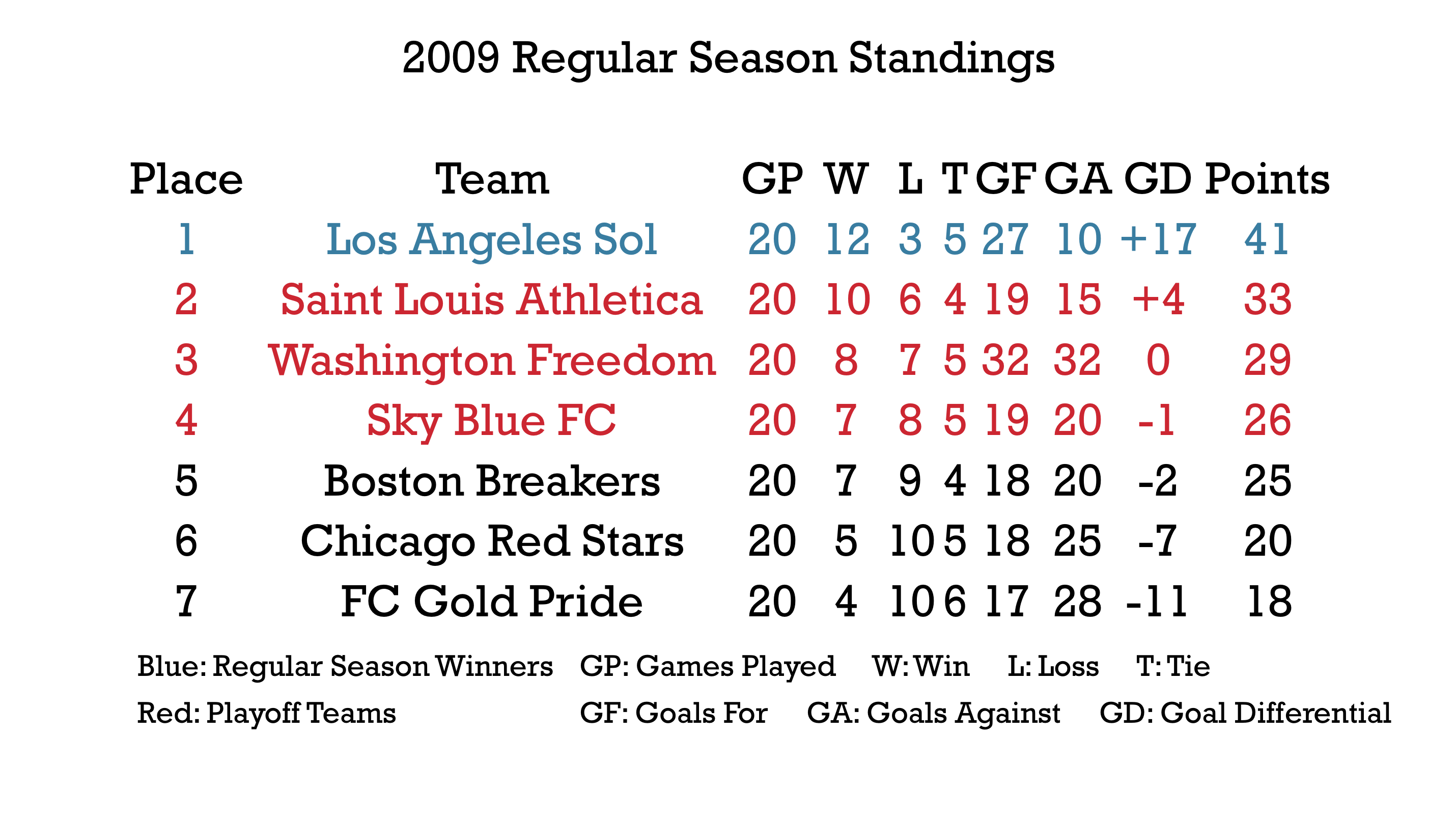
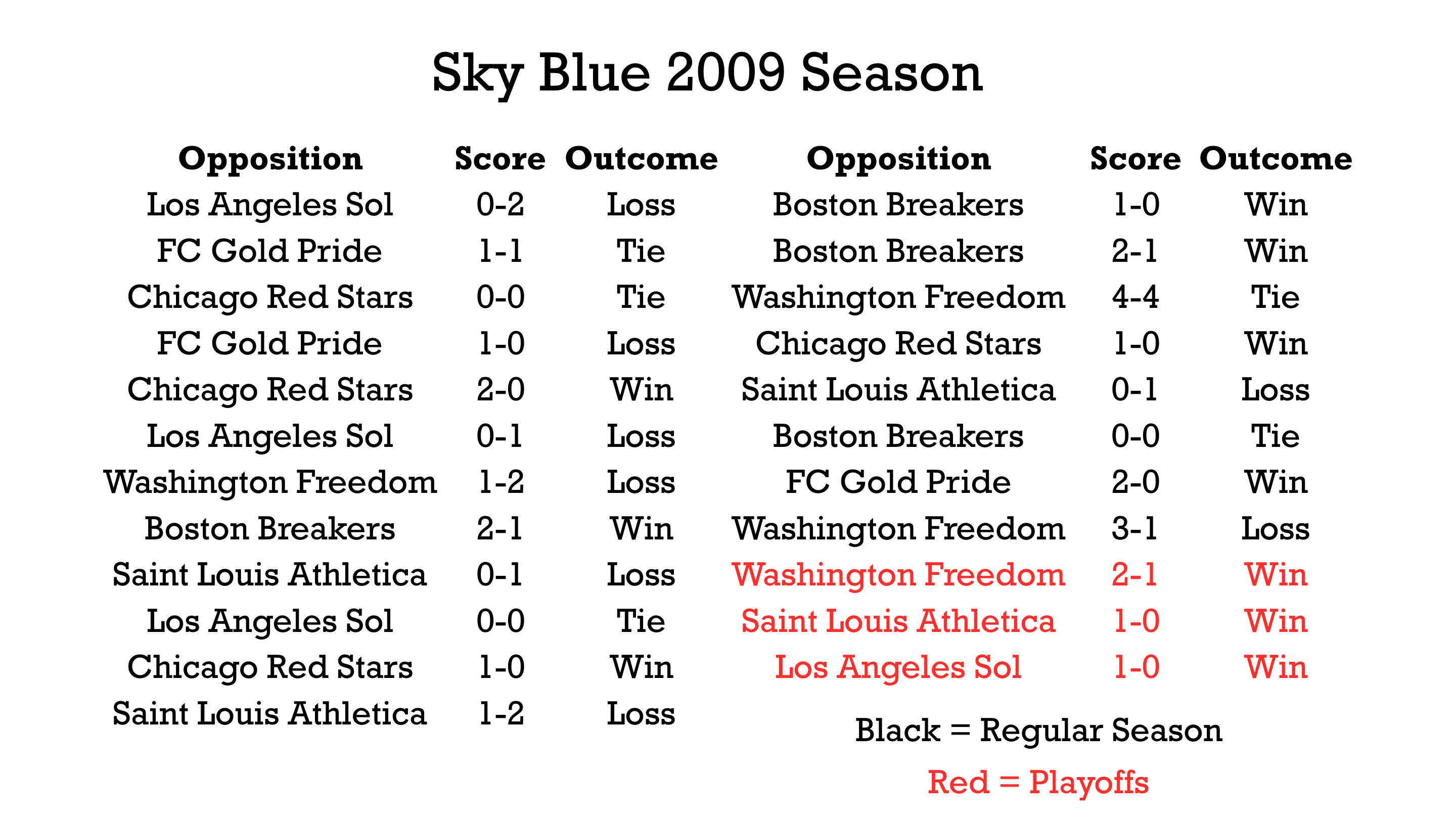
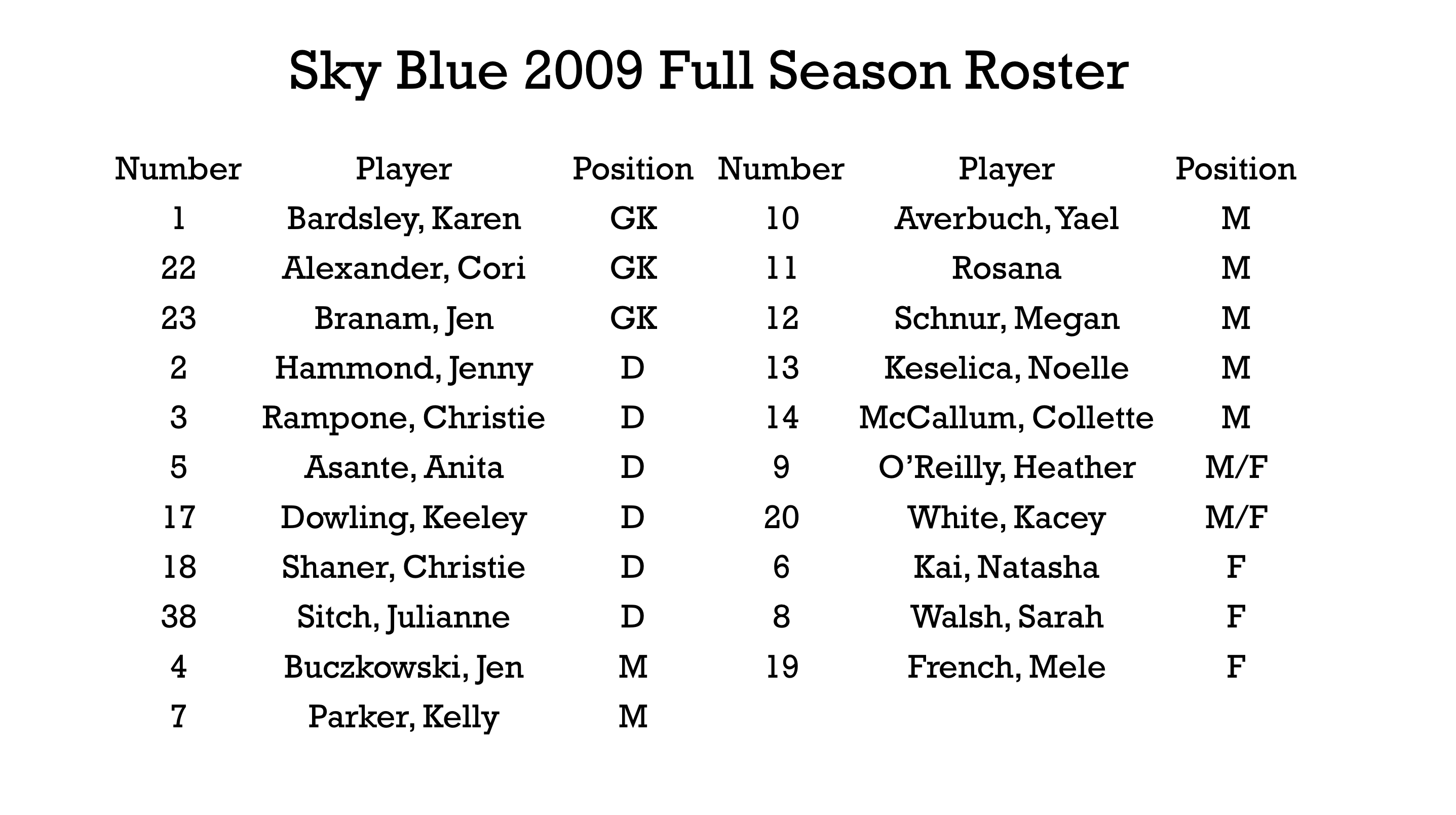
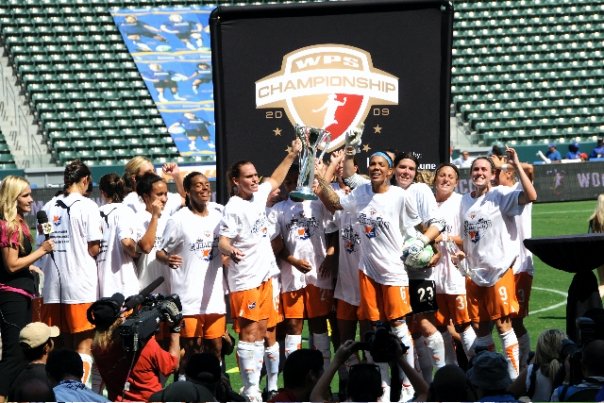
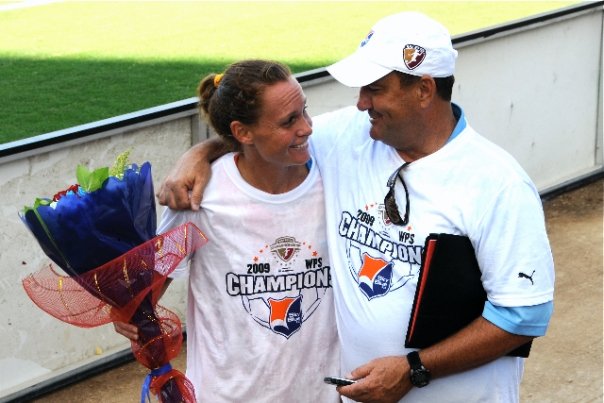

 Backline Soccer Archive